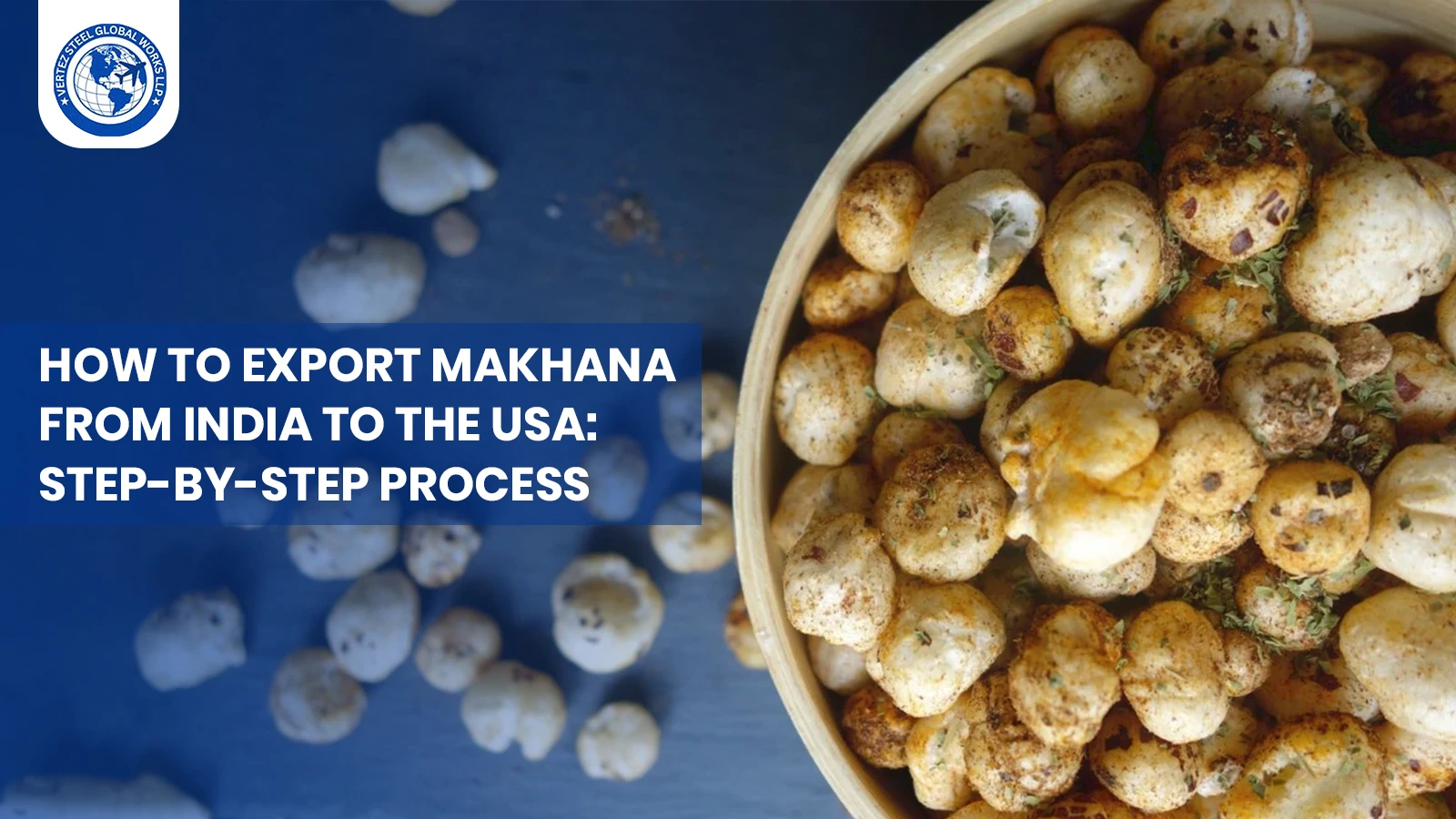
How to Export Makhana from India to the USA: Step-by-Step Process
Introduction: Global Demand & Why Buyers Love Makhana
Once considered a traditional Indian superfood, makhana has gained widespread recognition across global markets. Its low-fat, gluten-free, and plant-based profile makes it a preferred snack in countries and parts of Europe and the Pacific region.
India is the world’s largest producer of fox nuts, making makhana export a strategically important segment within agricultural trade. With rising awareness of healthy snacks, makhana exports to the USA have grown steadily across wholesale, retail, and private-label channels. U.S. buyers increasingly source directly from India to ensure quality consistency, cost efficiency, and reliable supply chains.
Exporting successfully requires navigating challenges such as regulatory compliance, logistics, pricing, and risk management. The following step-by-step roadmap helps international buyers streamline their sourcing process efficiently.
Step 1: Identify U.S. Market Demand & Avoid Low-Selling Products
Understanding the U.S. snack market is critical. Demand is strongest for clean-label, gluten-free, and plant-based snacks, which positions makhana as an ideal product.
Buyers should focus on:
- Health food distributors
- Specialty grocery chains
- Bulk wholesalers and foodservice suppliers
- Private-label snack brands
By analyzing trends, buyers can avoid sourcing low-selling products and focus on high-demand variants, ensuring faster turnover and minimized inventory risk.
Step 2: Source High-Quality Makhana & Prevent Inconsistent Supply
Makhana cultivation is concentrated in Bihar and surrounding regions. Export-grade sourcing focuses on:
- Uniform kernel size and whiteness
- High expansion ratio
- Low moisture content
- Clean, break-free kernels
Working with trusted exporters ensures standardized grading, minimizing quality variations across bulk shipments and building importer confidence.
Step 3: Navigate U.S. Regulations Without Compliance Delays
A compliant makhana export to the USA process requires:
- FSSAI certification (India)
- FDA facility registration
- FDA Prior Notice filing
- Phytosanitary Certificate
- Certificate of Origin
- Commercial Invoice and Packing List
Professional exporters manage these requirements internally, reducing regulatory risks and ensuring smooth clearance at U.S. ports.
Step 4: Package & Label Correctly to Avoid Retail Rejections
Buyers can choose:
- Bulk packaging for wholesalers
- Retail-ready consumer packs
- Customized private-label branding
All labels must meet FDA standards, including nutritional facts, allergen information, and country-of-origin disclosure. Private labeling enables global buyers to establish a strong brand presence without investing in local repacking infrastructure.
Step 5: Evaluate Prices to Protect Your Profit Margins
Understanding the makhana price in the US market helps buyers plan costs accurately. Key factors include:
- Grade & Size: Premium kernels command higher prices
- Processing Level: Raw versus roasted or flavored variants
- Packaging Type: Bulk packs reduce per-unit cost
- Freight & Duties: Shipping mode and port charges affect landed cost
Partnering with experienced makhana exporters minimizes intermediary costs, ensuring predictable pricing and higher profit margins.
Step 6: Simplify Logistics to Reduce Shipping Expenses and Delays
Efficient exporters optimize logistics by:
- Consolidating multiple product categories
- Maximizing container utilization
- Managing customs documentation
- Coordinating port-to-warehouse delivery
Well-planned logistics reduce transit risk, save costs, and guarantee timely supply.
Step 7: Calculate Export Profit Margin Before Scaling Orders
The Makhana export profit margin remains attractive due to low sourcing costs in India and rising global demand. Margin optimization improves through:
- High-volume procurement
- Long-term supplier agreements
- Private labeling and premium positioning
- Consolidated shipments
Buyers can evaluate commercial feasibility before scaling orders, ensuring a strong ROI.
Step 8: Leverage Export Data to Forecast Demand Accurately
Analysis of makhana export data shows consistent growth in North America:
- India dominates global supply
- Export volumes to the USA continue to rise
- Bulk imports are preferred by new buyers
- Seasonal demand peaks during wellness campaigns and festive periods
Using export data, buyers can forecast demand, plan procurement, and optimize inventory effectively.
Step 9: Secure Payments & Reduce Transaction Risk
Secure transactions are achieved through:
- Letters of Credit (LC)
- Advance payment with balance against documents
- Bank wire transfers
Clear contracts and standardized international payment terms reduce financial risk and ensure smooth, long-term trade relationships.
Step 10: Choose the Right Export Partner to Avoid Vendor Fragmentation
Partnering with a reliable exporter like Vertez Steel Global Works LLP consolidates multiple product categories, manages compliance, and offers private labeling. Buyers benefit from a single-point contact model, reduced communication gaps, and efficient scaling.
Fun Facts & Global Trends
- Makhana is marketed internationally as fox nuts or lotus seeds, appealing to health-conscious consumers globally.
- Growing demand in vegan, gluten-free, and clean-label snack segments in the USA, Europe, and the Pacific.
- Roasted and flavored variants are increasingly popular due to convenience and shelf life.
- Globally, makhana is positioned alongside popcorn, nuts, and protein snacks rather than just ethnic foods.
Confidently Build Long-Term Supply Chains
With growing international demand, makhana export offers a scalable, profitable opportunity for global buyers. By understanding pricing, margins, and makhana export data, buyers can confidently establish long-term sourcing relationships with India.
Companies like Vertez Steel Global Works LLP simplify this process by offering end-to-end support from sourcing high-quality makhana and managing compliance to private labeling and logistics. With a dedicated single-point contact, they help international buyers save time, reduce risk, and scale efficiently.
Contact Vertez Steel Global Works LLP right now to take advantage of their trustworthy Indian expertise to speed up your sourcing procedure!
FAQs
1. How to export makhana to the USA?
Export high-quality makhana, follow FDA and FSSAI regulations, package properly, manage logistics, and secure payments. Partnering with trusted exporters simplifies the process.
2. What is the makhana price in the US market?
Prices vary by grade, size, processing, packaging, and shipping. Direct sourcing from reliable exporters stabilizes costs and maximizes margins.
3. What is the typical export profit margin?
Makhana export profit margin is attractive due to low sourcing costs and growing demand. Higher volumes, private labeling, and consolidated shipments increase profitability.
4. How to get a smooth export process?
Work with experienced exporters like Vertez Steel Global Works LLP for sourcing, compliance, packaging, and logistics to reduce risks and save time.