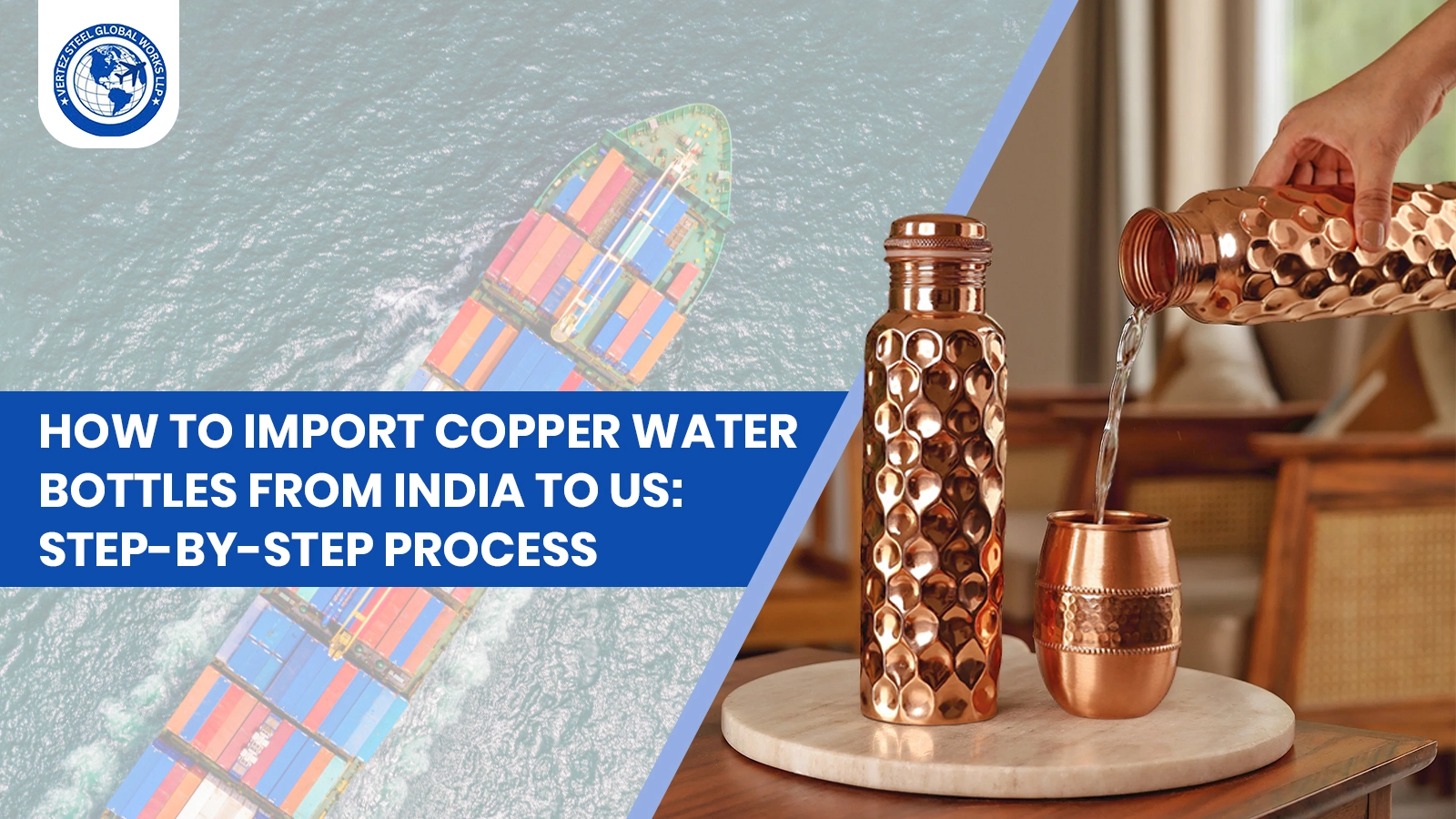
How to Import Copper Water Bottles from India to the U.S.
Introduction: Understanding the U.S.–India Copper Bottle Import Landscape
Walk into any wellness store or browse premium drinkware online in the U.S., and copper water bottles are hard to miss. Once rooted in Ayurvedic tradition, they’ve now become a mainstream product tied to wellness, sustainability, and conscious living. For importers, this surge presents a clear opportunity—but also a layered compliance challenge.
India sits at the center of this trade. It combines centuries-old copper craftsmanship with export-ready manufacturing and competitive pricing. However, successfully importing copper bottles into the U.S. requires far more than placing a bulk order. From supplier vetting and FDA rules to tariffs, shipping, and customs clearance, the process demands precision.
This guide breaks down the entire journey—step by step—so wholesalers, retailers, and private-label brands can approach copper bottle imports with confidence, clarity, and commercial foresight.
The Market Opportunity for Importing Copper Water Bottles
The North American market for copper drinkware has grown steadily over the past few years. Health-conscious consumers associate copper bottles with antimicrobial properties, while eco-focused buyers prefer them over plastic alternatives. Add premium gifting and corporate wellness programs into the mix, and demand becomes even more compelling.
India’s advantage lies in its mature ecosystem of copper bottle suppliers India has built over decades. Manufacturers range from small artisan workshops producing hand-hammered bottles to large-scale factories capable of handling private-label bulk orders. Cost efficiency, export familiarity, and craftsmanship make India a natural sourcing hub for copper drinkware import businesses.
That said, the rewards come with risks. Importers must navigate regulatory scrutiny, rising tariffs, and quality inconsistencies. Those who manage these variables well build defensible margins; those who don’t face delays, penalties, or rejected shipments.
Phase 1: Supplier & Product Sourcing in India
Identifying Reliable Copper Bottle Manufacturers
Most buyers begin their search on platforms like IndiaMART or TradeIndia. While these marketplaces are useful, listings alone don’t equal reliability. Verified badges, export history, and repeat international buyers matter far more.
A key sourcing decision involves choosing between hand-hammered and machine-made bottles. Handcrafted products appeal to premium markets but vary slightly in finish, while machine-made bottles offer uniformity and scalability. Established copper water bottle manufacturers will clearly communicate these differences.
ISO 9001:2015 certification is another non-negotiable marker. It signals process control, documentation discipline, and consistency—critical for U.S.-bound goods.
Quality Verification and Sample Evaluation
Never skip samples. Pre-production samples confirm design intent, while finished samples reveal actual execution. Importers should verify copper purity, ensure food-safe construction, and examine interior coating claims closely.
Leak-proof sealing, smooth threading, and durable finishing directly affect customer satisfaction. Packaging also matters—thin boxes or poor cushioning often fail during international transit.
Indian Export Compliance Requirements
Every legitimate exporter must hold a valid Importer-Exporter Code (IEC) issued by India’s DGFT. While suppliers typically handle export documentation, buyers should understand who is responsible for what. Vague answers or reluctance to share documents are red flags during onboarding.
Phase 2: Product Classification, Tariffs & U.S. Regulatory Compliance
HS Code Classification for Copper Water Bottles
Copper water bottles generally fall under Chapter 74 of the Harmonized Tariff Schedule, covering copper household articles. Correct classification isn’t a formality—it directly affects duty rates, inspections, and clearance speed.
A licensed U.S. customs broker should always validate the HS code before shipment. Misclassification is one of the fastest ways to invite audits.
High Tariff Environment for Copper Products (2025–2026 Update)
Copper-intensive products remain subject to Section 232 tariffs under the Trade Expansion Act. In many cases, effective tariff exposure can reach 50%, dramatically impacting landed cost.
Importers must confirm whether their specific product configuration is affected and model pricing accordingly. Ignoring copper import duties USA realities is one of the most common margin-killers in this category.
FDA Compliance for Copper Water Bottles
Copper water bottles are treated as food-contact articles in the U.S. This brings FDA oversight into play. Each shipment requires proper product codes, manufacturer identification, and accurate filing.
FDA holds often occur due to incomplete or inconsistent data—not because the product itself is unsafe. Precision here prevents costly port delays.
Country of Origin and Marking Requirements
U.S. Customs mandates clear “Made in India” markings. These must be permanent, legible, and correctly placed—either on the product or its retail packaging. Non-compliance can result in relabeling orders or fines.
Phase 3: Shipping & International Logistics Planning
Choosing the Right Incoterms
FOB and CIF are the most common Incoterms for shipping copper bottles. FOB gives importers greater cost control and visibility, while CIF offers convenience at the expense of transparency. Understanding where risk transfers are critical.
Selecting the Best Freight Method
Air freight works for test orders or urgent restocks but quickly becomes expensive. Sea freight is the norm for commercial volumes, with transit times ranging from 25–40 days to major U.S. ports.
Costs depend on volume, weight, seasonality, and routing—factors that must be built into pricing models when shipping copper bottles to the USA.
Importer Security Filing (ISF 10+2)
For ocean freight, ISF filing is mandatory. It must be submitted before vessel departure, and errors carry steep penalties. Responsibility usually falls on the importer, even if a broker files on their behalf.
Phase 4: U.S. Customs Clearance & Entry Process
Customs officers focus heavily on documentation accuracy. Commercial invoices must reflect true transaction value, packing lists must align with physical cargo, and Bills of Lading establish legal ownership.
Shipments over $2,500 require formal entry and a customs bond. Most repeat importers opt for continuous bonds to streamline operations. Beyond duties, importers should account for MPF and HMF to calculate total landed cost accurately.
Risk Management and Common Import Pitfalls
Compliance risks often stem from misdeclared materials, incorrect FDA filings, or missing origin markings. Financial risks arise when tariffs are underestimated or supplier quality fluctuates.
Smart importers reduce exposure by working with licensed customs brokers, commissioning third-party inspections in India, and locking expectations into clear supplier contracts.
Choosing the Right Long-Term Copper Bottle Supply Partner
As import volumes grow, consistency becomes more valuable than chasing the lowest unit price. Reliable partners offer stable quality, documentation accuracy, and logistics coordination—especially critical in high-tariff environments.
This is where export-focused partners like Vertez Steel Global fit into the equation. Rather than acting as a simple supplier, they operate as an on-ground export extension—coordinating sourcing, documentation, compliance, and logistics under one transparent framework. For importers looking to scale private-label or bulk copper bottle programs, this integrated approach reduces friction and operational risk.
Final Takeaways for Importers Planning to Import Copper Bottles
Importing copper water bottles from India is commercially viable, but it’s regulation-heavy and margin-sensitive. Current tariff structures make classification accuracy and cost modeling essential.
Those who succeed don’t rush orders—they build systems. Careful supplier selection, compliance discipline, and logistics planning protect both margins and brand reputation when you import copper bottles into the U.S.