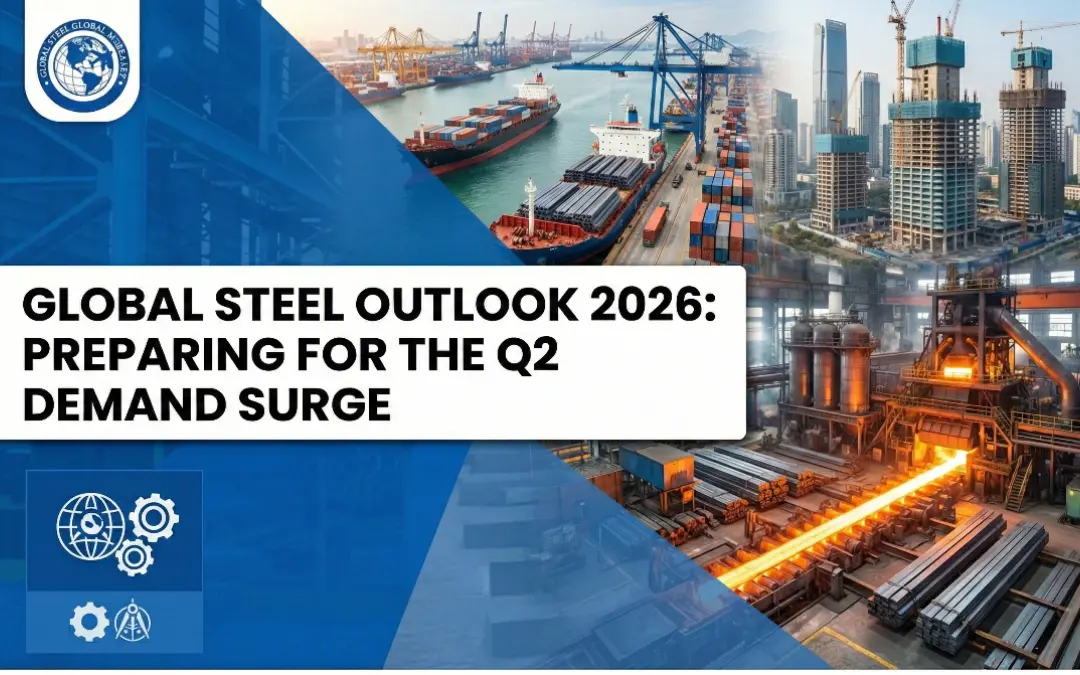
Global Steel Outlook 2026: Preparing for the Q2 Demand Surge
Introduction: 2026 as a Strategic Reset Year for Steel
The global steel industry is entering 2026 with renewed momentum. After navigating volatility in raw material prices, shifting trade policies, and uneven post-pandemic recovery cycles, the market is showing signs of structured stabilization. For manufacturers, traders, EPC contractors, and institutional buyers, 2026 is not just another operating year; it is a positioning window.
Early indicators suggest that Q2 will be the most critical quarter for pricing direction, volume acceleration, and contract negotiation leverage. Seasonal construction activity, infrastructure disbursement cycles, and inventory restocking patterns are expected to converge, creating a noticeable surge in steel consumption.
This article provides a strategic breakdown of the Global Steel Demand Forecast 2026, highlights regional and sectoral drivers, analyzes supply-side risks, and outlines practical preparation strategies for navigating the anticipated Q2 upswing in the steel market.
Global Steel Demand Forecast 2026: Macro Overview
Industry Stabilization After Cyclical Adjustments
The years leading up to 2026 were marked by supply discipline and recalibration. Major producing regions adjusted capacity utilization rates in response to fluctuating demand and decarbonization pressures. Raw material volatility—especially in iron ore and coking coal, began stabilizing toward late 2025, reducing extreme pricing swings that previously disrupted planning cycles.
This stabilization phase sets the foundation for moderate but steady global expansion in 2026.
Projected Growth Trends
Global steel demand in 2026 is expected to grow in the range of 2–3% year-on-year, supported by:
- Infrastructure-led spending
- Manufacturing recovery
- Energy transition investments
- Urbanization in emerging economies
Developed economies are likely to show slower but stable growth, while emerging markets, particularly in Asia and parts of the Middle East, will drive incremental volume expansion.
Structural vs Cyclical Drivers
Structural drivers include renewable energy expansion, electrification, and industrial modernization. Cyclical drivers, however, will play a larger role in Q2, especially construction-led restarts after winter slowdowns in Europe and North America.
Regional Outlook: Where Demand Will Accelerate
Asia-Pacific
Asia remains the largest steel-consuming region globally.
- China continues infrastructure investments while recalibrating its real estate exposure. Although property demand remains cautious, public works and industrial upgrades will sustain consumption.
- India is expected to be one of the fastest-growing steel markets, driven by transportation corridors, smart city projects, and manufacturing expansion.
- Southeast Asia is benefiting from supply chain diversification trends, leading to higher demand for structural steel and flat products.
Europe
European steel demand in 2026 will be closely linked to green transition projects:
- Wind energy installations
- Grid modernization
- Automotive electrification
While traditional construction may remain moderate, renewable and industrial segments are expected to offset softness. Demand for high-grade and low-emission steel products is likely to increase.
North America
The U.S. and Canada continue benefiting from large-scale infrastructure modernization programs and manufacturing reshoring initiatives. Q2 2026 could see significant construction steel demand as public and private projects accelerate in warmer months.
Energy infrastructure, including pipelines and renewable installations, will also contribute meaningfully to volume growth.
Middle East & Africa
Mega infrastructure projects and industrial diversification programs in Gulf economies are expected to sustain robust demand. Oil & gas investments and urban expansion projects will support both long and flat product segments.
Why Q2 2026 is the Critical Inflection Point
Industry analysts are circling April 2026 as the "danger zone" for price hikes. Several factors are creating a "perfect storm" for the second quarter:
- The Infrastructure Disbursement Spike: Government stimulus funds and "Green Deal" grants in the US and Europe are finally hitting the ground, unlocking massive structural steel requirements for grid modernization.
- The AI Infrastructure Boom: A surprising new driver this year is the global build-out of hyperscale AI data centers. Each of these massive facilities requires up to 20,000 tons of structural steel, creating localized supply squeezes for heavy sections and plate products.
- Inventory Replenishment: After a cautious Q1, distributors are currently operating on "Just-in-Time" buffers. As construction weather normalizes in the Northern Hemisphere, an aggressive restocking phase is expected to firm prices by 5–8% by mid-May.
Sector-Wise Steel Demand Analysis for Q2 2026
Construction & Infrastructure
This remains the dominant steel-consuming segment globally. Rebar, structural beams, and plate products will see strong Q2 demand driven by:
- Road and bridge construction
- Residential housing completions
- Commercial real estate stabilization
Automotive & Mobility
Electric vehicle production continues to expand globally. Although EVs reduce some traditional steel intensity, demand remains robust due to:
- Chassis and safety components
- Battery housing structures
- Charging infrastructure installations
Advanced high-strength steels will see higher adoption rates.
Energy & Renewables
Wind towers, solar mounting systems, and transmission grids are increasingly steel-intensive. As countries accelerate decarbonization targets, renewable energy installations are expected to rise in 2026, directly impacting flat and plate demand.
Industrial Equipment & Capital Goods
Manufacturing sector capital expenditure recovery will stimulate steel demand for heavy machinery, industrial equipment, and factory construction.
Supply-Side Considerations Heading into Q2
Capacity Utilization
While global installed steel capacity remains high, actual utilization rates will determine price direction. If demand accelerates faster than anticipated, tighter supply conditions may emerge temporarily.
Raw Material Sensitivity
Iron ore and scrap prices remain leading indicators for finished steel pricing. Scrap market tightness in particular can affect electric arc furnace (EAF) production economics.
Trade Policies and Tariffs
Anti-dumping duties, carbon border adjustment mechanisms, and regional export restrictions could influence trade flows in 2026. Companies must monitor regulatory changes closely to avoid cost surprises.
Strategic Recommendations for Steel Stakeholders
For Manufacturers
- Align production schedules with anticipated Q2 construction spikes
- Secure raw material contracts in advance to hedge volatility
- Optimize energy procurement strategies
- Evaluate value-added or green steel product expansion
For Traders & Exporters
- Lock in supply contracts before Q2 demand peaks
- Diversify sourcing to reduce geopolitical exposure
- Plan shipping schedules proactively to avoid freight congestion
For EPC Contractors & Industrial Buyers
- Consider forward-booking key steel inputs in Q1
- Diversify supplier networks to reduce disruption risk
- Implement price risk management strategies
For Investors
- Focus on regions with infrastructure momentum
- Monitor companies expanding low-emission steel production
- Evaluate balance sheet strength amid potential price swings
Proactive positioning before the Q2 acceleration window can protect margins and ensure supply continuity.
Risks That Could Alter the 2026 Outlook
Despite positive indicators, several risks remain:
- Escalating geopolitical tensions
- Unexpected global economic slowdown
- Commodity price shocks
- Regulatory tightening in emissions-intensive sectors
- Currency fluctuations impacting trade competitiveness
Stakeholders should incorporate scenario planning into their 2026 strategies.
Conclusion: Secure Your Position Before the Q2 Surge
The 2026 steel market favors the prepared. With regional supply gaps opening due to new trade regimes and the AI infrastructure surge, having a partner who understands the 2026 compliance landscape is essential.
Vertez Steel Global is built for this new era. We don't just move metal; we manage the complexity of CBAM documentation, navigate the latest US tariff codes, and ensure your project stays on track while others are stuck at the port. Don't wait for the Q2 demand spike to erode your profitability.
Contact Vertez Steel Global today to discuss your Q2 sourcing strategy and lock in competitive steel solutions before the surge begins.
Also Read: Comparing Indian TMT Bar Grades for International Construction Projects
Frequently Asked Questions (FAQs)
1. What is the global steel demand forecast for 2026?
The global steel demand forecast for 2026 indicates moderate growth of approximately 2–3%, supported by infrastructure spending, renewable energy expansion, and manufacturing recovery. Emerging markets are expected to contribute significantly, while developed economies maintain stable but slower demand expansion.
2. Why is Q2 2026 important for the steel market?
Q2 typically marks peak construction activity in many regions. Inventory restocking, improved weather conditions, and infrastructure budget releases often converge during this period, creating stronger demand and potential price firming across multiple steel product categories.
3. Which sectors will drive steel demand in 2026?
Construction, renewable energy, automotive manufacturing, and industrial equipment sectors are expected to drive demand. Infrastructure modernization and electrification projects will particularly increase consumption of structural steel, flat products, and specialized high-strength steel grades.
4. Could steel prices rise during Q2 2026?
Yes, steel prices may firm during Q2 due to seasonal demand acceleration, stable raw material costs, and tighter supply conditions. Early contract negotiations and advanced procurement strategies can help buyers mitigate potential price increases.
5. How can businesses prepare for the Q2 steel demand surge?
Companies should secure forward contracts, diversify suppliers, hedge raw material exposure, and plan logistics early. Strategic sourcing before demand peaks allows better pricing control, improved lead times, and reduced operational risk.
6. What risks could impact the 2026 steel outlook?
Geopolitical instability, raw material volatility, trade restrictions, economic slowdowns, and currency fluctuations could alter demand and pricing dynamics. Businesses should incorporate flexible sourcing and contingency planning into their 2026 strategies.
7. How does Vertez Steel Global support international steel buyers?
Vertez Steel Global connects buyers with reliable manufacturers, manages production coordination, handles export documentation, and oversees logistics planning. This integrated approach ensures timely deliveries, competitive pricing, and reduced sourcing risks ahead of anticipated demand surges.