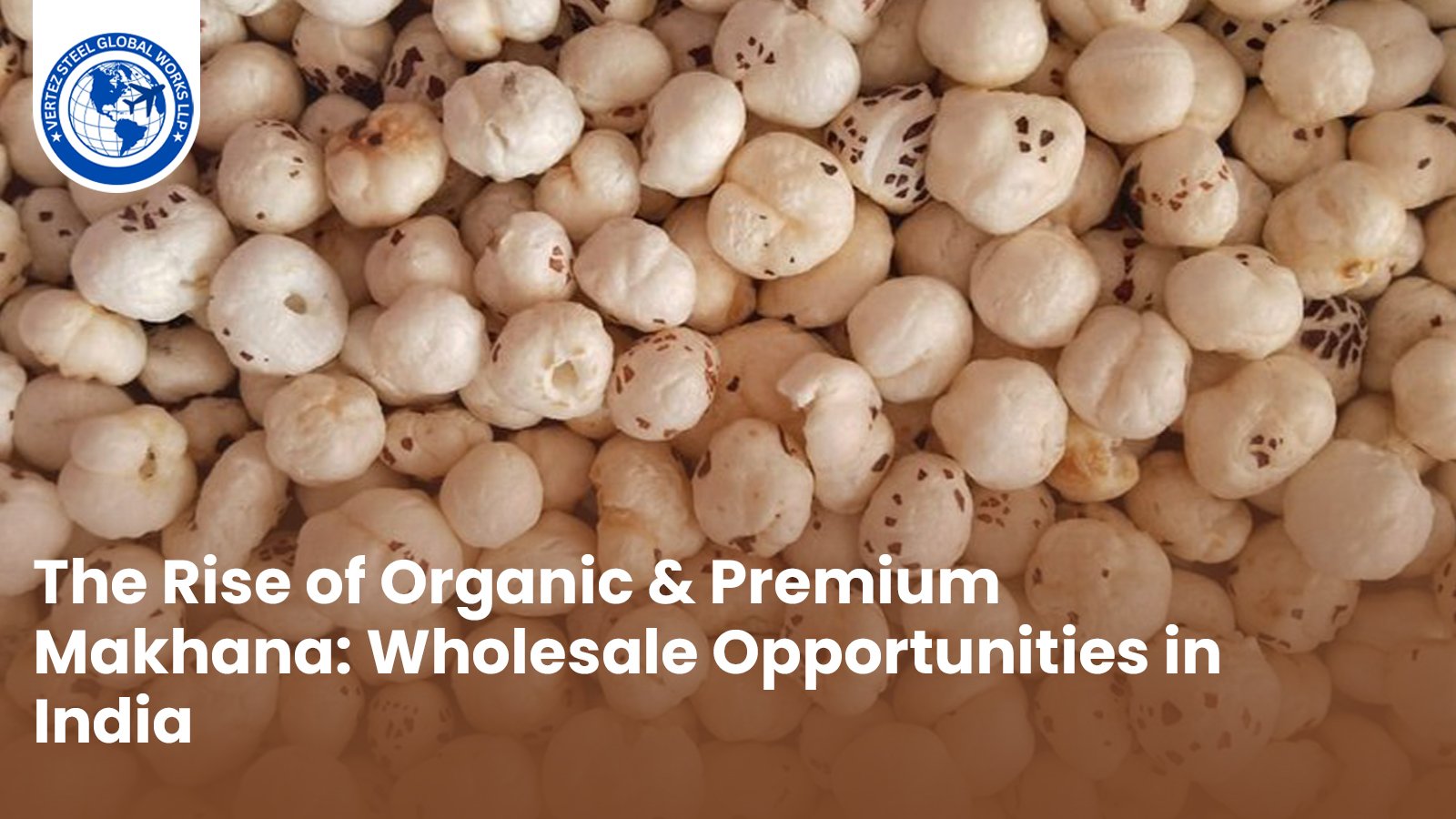
The Rise of Organic & Premium Makhana: Wholesale Opportunities in India
1. Introduction: From Ancient Snack to Global Super food
For centuries, Makhana (Foxnuts) has been part of India’s cultural and culinary heritage. Once seen only in temple rituals and festive desserts, these nutrient-dense seeds from Bihar’s ponds are now stocked on supermarket shelves from Dubai to New York.
The shift from traditional to organic and premium-grade Makhana has completely redefined its market potential. What began as a cottage industry has evolved into a thriving export sector — connecting Makhana suppliers, Foxnuts suppliers, and Phool Makhana wholesalers to global demand. Today, India stands as the world’s primary hub for sourcing and supplying this ancient superfood.
2. The Market Boom: India’s Makhana Industry at a Glance
India leads as the largest producer and exporter of Makhana, contributing nearly 90% of the global output. According to trade estimates, the country’s makhana export value is projected to cross USD 120–150 million in the coming years, driven by rising consumption of healthy snacks.
The global Makhana market is growing at a CAGR of around 6–9%, with organic and flavored variants pushing the premiumization trend. Domestically too, urban consumers are switching from fried snacks to roasted makhana, fueling local wholesale demand.
This shift is not just about health — it’s about trust. As more consumers insist on organic certification and transparent sourcing, wholesalers are reaping higher margins through premium branding and export partnerships.
3. The Evolution Journey: From Raw Ponds to Premium Packs
Stage 1: Traditional Cultivation in Bihar & Beyond
Makhana farming began in Bihar’s Mithilanchal region, expanding to parts of Assam, West Bengal, and Madhya Pradesh. Traditionally harvested from pond ecosystems, it provided livelihood to thousands of local farmers. With cooperative models and government training, these regions have now adopted sustainable farming practices, maintaining the purity and heritage of the crop.
Stage 2: Introduction of Organic Practices
The move toward organic Makhana suppliers has transformed both quality and profitability. Farmers have reduced dependency on chemicals, following global organic certification standards. This has increased the Makhana wholesale price per Kg, especially for export-quality, pesticide-free lots.
Organic Makhana is now graded, roasted, and packed in certified facilities — ensuring traceability from pond to packet.
Stage 3: Rise of Premium Branding
Premium Makhana today isn’t just a snack — it’s a lifestyle symbol. Global FMCG brands and private labels now source directly from Makhana wholesalers who meet export-grade packaging, roasting, and flavoring standards.
India’s leading exporters have successfully launched flavored, roasted, and value-added variants, giving the segment international appeal. These transformations opened a vast window for trade and sourcing platforms to rise.
One such reliable name among organic and premium makhana suppliers is Vertez Steel Global, which integrates modern supply chain systems with transparent, efficient export solutions — ensuring consistent quality for global buyers.
4. Why Organic & Premium Makhana is in Demand
The global health wave is no fad — it’s a market shift. Organic and premium makhana perfectly aligns with this shift, offering:
- High protein, low-fat content for fitness enthusiasts.
- Gluten-free, vegan-friendly benefits for diet-conscious consumers.
- Low glycemic index, making it a perfect snack for diabetics.
- Sustainability, as it’s cultivated with minimal environmental impact.
Rising demand for clean-label, plant-based snacks is turning Makhana into a must-have product line for international distributors. The surge of D2C food brands, online marketplaces, and gourmet retail stores has pushed Makhana wholesalers near me and Foxnuts suppliers to scale up production and packaging capacity.
5. Wholesale Opportunities: The Emerging Business Landscape
The wholesale Makhana sector has evolved from fragmented trading to structured distribution channels. Today, both domestic and export markets are booming.
- Key wholesale hubs: Patna, Delhi, Indore, Kolkata, and Pune dominate sourcing and distribution.
- Makhana wholesale price per Kg varies between ₹300–₹800 based on grade, size, and organic certification.
- Private labeling and B2B collaborations are expanding, giving global brands access to Indian organic makhana under their own labels.
This is where Phool makhana wholesalers and Makhana suppliers bridge the gap — connecting local farmers to international demand. As more importers seek stable partners, India’s wholesale network is becoming both profitable and reliable.
6. Factors Driving the Growth of Makhana Wholesalers
Several strong tailwinds are propelling this industry forward:
- Government Support: GI tagging of Bihar Makhana and subsidies under APEDA have boosted credibility in export markets.
- Technological Upgrades: New roasting, grading, and packaging machinery ensure better shelf life and uniformity.
- Supply Chain Modernization: Improved cold storage and logistics reduce wastage and enable long-distance trade.
- Global Demand: The U.S., Japan, UAE, and Middle East are driving large-scale import orders, strengthening India’s export footprint.
Together, these elements are creating a fertile ecosystem for Makhana wholesalers and Foxnuts suppliers to expand.
7. Challenges in Scaling Organic & Premium Makhana
Every growing sector faces its share of hurdles:
- Supply inconsistencies: Weather and pond conditions still affect harvest yields.
- Price volatility: Seasonal spikes and middlemen margins disrupt fair pricing.
- Farmer training: Need for skill upgrades in organic cultivation and handling.
- Private label competition: More FMCG entrants are pushing smaller wholesalers to differentiate through quality and traceability.
Despite these challenges, consistent demand ensures the sector’s long-term viability.
8. The Future Outlook: India’s Role in the Global Foxnut Market
Industry experts predict a CAGR of 7–8% through 2028, driven by sustainable sourcing and consumer trust in Indian origin makhana.
The rise of online B2B marketplaces is connecting Makhana wholesalers near me to international buyers directly, cutting layers of inefficiency.
Future growth lies in:
- Ready-to-eat flavored formats.
- Ethical sourcing certifications.
- Export diversification into Europe and Southeast Asia.
- Strategic partnerships with integrated exporters like Vertez Steel Global who streamline documentation, logistics, and fulfillment for agro products.
9. Conclusion: A Prosperous Path Ahead
From the serene ponds of Bihar to premium global retail aisles, Makhana has completed a remarkable journey. The shift to organic and premium segments has not only elevated its image but also unlocked immense potential for wholesalers, exporters, and global distributors.
As India cements its position as the world’s Makhana powerhouse, the opportunities for reliable sourcing and sustainable partnerships continue to grow.
For businesses seeking a trusted supplier of organic and premium Makhana, Vertez Steel Global stands out as a dependable name — combining agile sourcing, transparent dealings, and world-class logistics to help you tap into India’s booming wholesale market.
The future of Makhana isn’t just healthy — it’s lucrative.
10. FAQs
Q1. What is the average Makhana wholesale price per Kg in India?
It typically ranges from ₹300–₹800 depending on size, quality, and certification.
Q2. Who are the leading Phool Makhana wholesalers?
Bihar-based cooperatives and premium exporters like Vertez Steel Global lead in quality-driven bulk supply.
Q3. Where can I find Makhana wholesalers near me?
Major sourcing hubs include Patna, Delhi, Indore, and Kolkata — easily accessible through online B2B platforms.
Q4. Is there a difference between Foxnuts and Makhana?
No. Both refer to the same product — seeds of the Euryale ferox plant, locally known as Makhana in India.