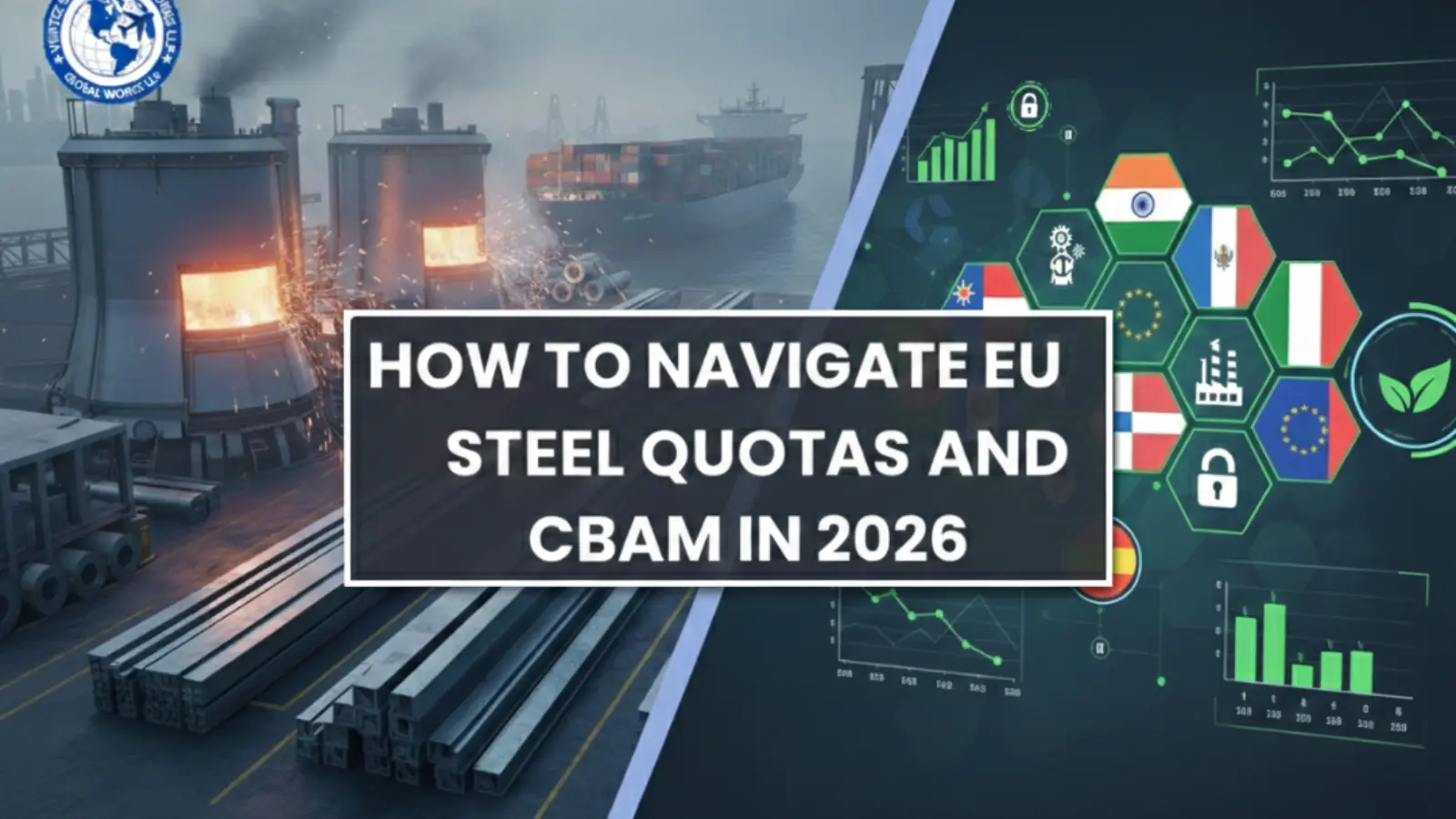
How to Navigate EU Steel Quotas and CBAM in 2026
If you are planning to export or import steel into Europe, you must understand the Steel Export Regulations 2026. These new rules will directly affect your pricing, documentation, and delivery timelines. Many buyers are already reviewing their sourcing strategy because the 2026 Steel Export Regulations are becoming stricter and more structured.
If you source steel from India, you may be asking:
Will quotas affect my shipment?
Will there be extra carbon taxes?
Will my goods get delayed at EU ports?
These are valid concerns. The EU market is still strong, but the rules are changing. In 2026, steel imports into Europe will be influenced by updated quota systems and carbon reporting rules under CBAM.
If you understand them clearly, you can avoid extra costs and shipment delays. Let’s break this down so you can plan your steel sourcing with confidence.
Understanding EU Steel Quotas in 2026
The European Union applies safeguard quotas on steel imports. These quotas limit how much steel can enter the EU from different countries, including India.
Here is how it works in simple terms:
- Each steel category has a fixed quantity allowed.
- Once that limit is crossed, higher duties apply.
- If your shipment arrives after the quota is full, you may pay extra import tax.
For you as a buyer, this means timing matters. Planning your orders late in the quarter can increase your cost.
At the same time, you also need to think about CBAM compliance with India requirements. While quotas deal with quantity limits, CBAM focuses on carbon emissions linked to steel production. Both systems work together, and both affect your final landed cost.
If your supplier does not track quota usage or emission reporting properly, your shipment could face unexpected duties or customs questions.
What Is CBAM, and Why It Matters to You
CBAM stands for Carbon Border Adjustment Mechanism. It is the EU’s way of charging for carbon emissions on certain imported goods, including steel.
In simple words, if steel production creates carbon emissions, the EU wants that carbon cost to be declared and adjusted at the border.
From 2026, financial adjustments will begin. This means:
- Importers must submit emission data.
- Carbon cost certificates may be required.
- Incomplete reporting can cause penalties.
If you are sourcing from India, CBAM compliance in India becomes important for your business. Your supplier must provide accurate emission data and production details. Without proper documentation, customs clearance can slow down.
For you, this affects:
- Final import cost
- Compliance risk
- Reputation with EU authorities
You do not want surprises at the port because carbon reports were incomplete.
How Steel Export Regulations 2026 Impact Your Business
The biggest impact of export laws governing steel will be on cost control and shipment planning.
Here are four areas where you may see changes:
Pricing Structure
Quota limits and CBAM carbon charges may increase the landed cost of steel.
Documentation
More paperwork is required, including emission reports and production data.
Lead Time
If quotas fill up quickly, your shipment may need to wait for the next allocation period.
Compliance Risk
Incorrect reporting can result in penalties.
Because of these factors, compliance with CBAM in India becomes a key part of your sourcing strategy. It is no longer only about buying at a lower price. It is about buying correctly, with full documentation support.
If you work with multiple small vendors, managing all this information can become confusing.
Common Problems Buyers Face
Many importers struggle with:
- Working with different suppliers for different products
- Inconsistent quality standards
- Missing export documents
- Poor communication
- Delays at EU ports
When quotas close suddenly, buyers sometimes face unexpected duty costs. When emission reports are incomplete, shipments get questioned.
If your supplier does not understand India's compliance with CBAM, you may have to manage carbon paperwork yourself. That adds pressure on your internal team.
You want sourcing to feel simple and predictable. Instead, many buyers deal with last-minute changes and unclear communication.
This is where choosing the right export partner becomes important.
How Vertez Steel Global Supports You
Vertez Steel Global Works LLP works as a wholesale supplier and export partner from India, connecting Indian manufacturing with global buyers.
If you source steel and industrial goods, you may benefit from:
- Clear pricing with no hidden confusion
- Smooth logistics coordination
- Order consolidation from multiple manufacturers
- Export documentation support
- Private labeling options
In 2026, handling CBAM compliance in India properly will be part of responsible exporting. Working with a supplier who understands documentation flow, emission reporting basics, and EU import procedures helps reduce your compliance risk.
Instead of managing multiple factories yourself, you can simplify sourcing through a single coordination point.
This reduces:
- Communication gaps
- Shipment delays
- Paperwork confusion
You get better control over your bulk imports while keeping your supply chain stable.
Practical Steps You Can Take in 2026
If you are planning steel imports into Europe, here are simple steps you can follow:
Plan Early
Monitor EU quota allocation before confirming shipment dates.
Request Emission Data
Ask your supplier for carbon reporting details well in advance.
Track Documentation
Keep digital copies of invoices, mill certificates, and emission reports.
Consolidate Orders
Instead of small scattered shipments, consider bulk planning.
Choose Compliance-Aware Partners
A supplier familiar with CBAM compliance in India can make your process smoother.
These steps may sound simple, but they can protect your margins and reduce stress at customs clearance.
Conclusion
The European steel market is still full of opportunity. But in 2026, preparation will define your success.
Understanding the 2026 steel export regulations helps you control costs, avoid penalties, and protect your shipment timelines. If you ignore the Steel Export Regulations 2026, you may face higher duties, carbon charges, or documentation delays.
When quotas, carbon rules, and customs procedures become more structured, you need clarity in your sourcing process.
Vertez Steel Global Works LLP supports global buyers with structured sourcing, transparent pricing, and coordinated export handling from India. Instead of managing multiple vendors and complex paperwork alone, you can simplify your steel imports with a reliable partner who understands global trade flow.
If you are planning steel imports from India in 2026, taking action early and working with the right export partner can help you move forward with confidence. Your sourcing decisions today will shape your margins tomorrow.
FAQs
1. What are the steel export regulations for 2026?
Steel export regulations for 2026 refer to updated European Union rules that control steel imports through quota limits and carbon reporting. These rules affect how much steel you can ship, what documents you must provide, and what additional costs may apply.
2. How do EU steel quotas affect my imports?
EU steel quotas limit the quantity of specific steel products allowed into Europe within a set period. If your shipment arrives after the quota is filled, you may pay higher duties. Planning your shipments early helps you avoid unexpected costs.
3. What is CBAM compliance in India, and why is it important?
CBAM compliance in India refers to meeting EU carbon reporting rules for steel exported from India. You must submit emission data linked to production. Without proper carbon documentation, your goods may face delays, penalties, or additional carbon-related charges at EU borders.
4. Will CBAM increase my steel import costs?
CBAM may increase costs if carbon emissions are high or documentation is incomplete. You may need to purchase carbon certificates based on reported emissions. Working with suppliers who understand carbon reporting can help you manage and predict your final landed cost.
5. What documents are required under EU steel rules in 2026?
You may need mill test certificates, invoices, packing lists, shipping documents, and carbon emission reports. Accurate and complete paperwork helps prevent customs delays. Missing documents can result in penalties or longer clearance times at European ports.
6. How can I reduce risk when importing steel into Europe?
You can reduce risk by planning shipments early, tracking quota availability, requesting emission data in advance, and consolidating orders. Choosing a supplier familiar with EU rules and CBAM compliance in India helps you avoid compliance mistakes and unexpected expenses.
7. How can Vertez Steel Global support my steel imports?
Vertez Steel Global Works LLP supports you with structured sourcing, export documentation, smooth logistics coordination, and transparent pricing. This simplifies your steel imports, reduces communication gaps, and helps you manage EU quota and carbon reporting requirements confidently.