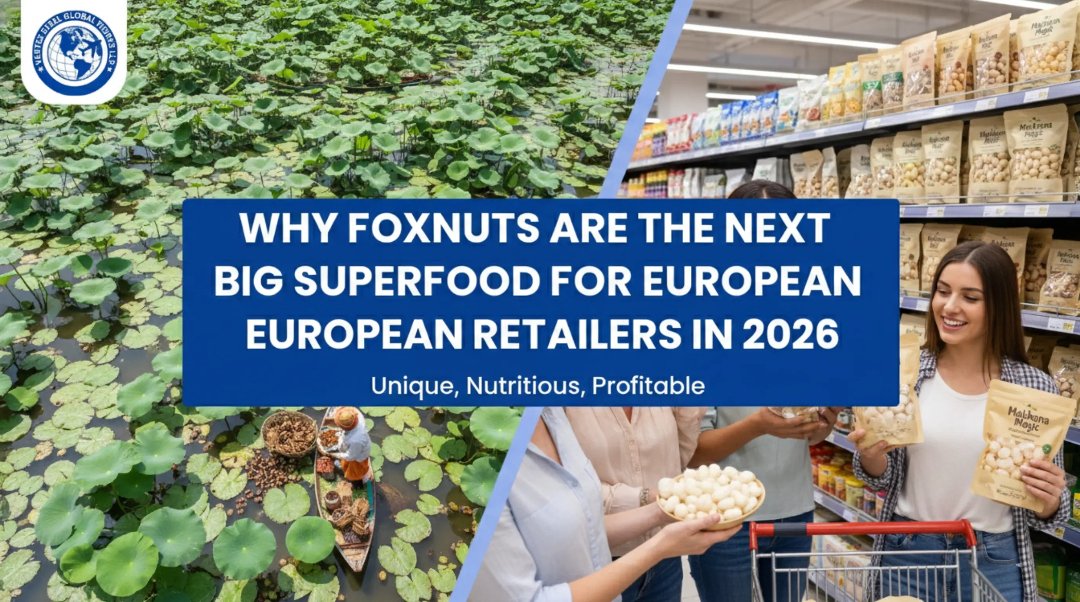
Why Foxnuts is the Next Big Superfood for European Retailers in 2026
Europe’s snack market is changing fast. Shoppers are moving away from heavy, fried foods and looking for options that are light, natural, and easy to trust. Amid this shift, foxnuts—also called makhana—are quietly gaining attention. These crunchy seeds have been eaten in Asia for centuries, but now they are stepping into European markets as a modern, healthy snack.
What makes foxnuts exciting is how easily they fit today’s lifestyle trends. They are naturally gluten-free, low in fat, and rich in natural minerals. Parents like them for children, office workers for quick energy, and older consumers because they are easy to chew and digest. They can be sold plain, roasted, or flavored, making them versatile for many snack ranges. Retailers and importers spotting this trend early have a chance to add a product that combines health, taste, and trust before competition rises.
In this guide, you will learn what foxnuts are, why European consumers are choosing them, how they fit into the gluten-free snacks list, their makhana health benefits, market growth insights, and sourcing tips for bulk buyers.
What Are Foxnuts, and Why Are They Trending?
Foxnuts, also called makhana, are seeds harvested from water plants grown mainly in India. After harvesting, they are sun-dried, popped, cleaned, and graded before packing. The result is a light, crunchy snack that feels natural and easy to eat.
What makes foxnuts special is their simplicity and their rich cultural heritage. Traditionally in India, especially in Bihar and eastern regions:
- Makhana has been consumed for centuries as a healthy snack and medicinal food.
- It was roasted and served during festivals and religious ceremonies, symbolizing purity and wellness.
- Families prepared it at home for children and elders, emphasizing its wholesome, natural qualities.
Today, this centuries-old tradition meets modern demand. Key features that make foxnuts popular in Europe include:
- Roasted, not fried, making them light and healthy
- Naturally part of the gluten-free snacks list
- Minimal processing, which builds consumer trust
Foxnuts combine tradition with modern snacking trends, offering a simple, nutritious, and versatile option that appeals to health-conscious European consumers.
Why European Consumers Are Choosing Foxnuts
Across Europe, healthy eating habits are reshaping snack choices. The Healthy snacks Europe market is expected to surpass USD 40 billion by 2026, fueled by plant-based, low-fat, and nutrient-rich options. Foxnuts check all these boxes.
Consumers appreciate that fox nuts are low in calories, easy to digest, and naturally filling. They work for multiple demographics:
- Parents pack them for kids’ lunches
- Office workers use them for quick energy
- Older consumers enjoy them for light nutrition
A real-life example comes from a small retailer in Amsterdam who reported that adding foxnuts to her store's healthy snack section increased repeat purchases by 35%, showing the snack's potential for long-term sales.
Simple Breakdown of Makhana Health Benefits
The Makhana health benefits are straightforward, making them easy to explain to customers:
- Low in fat and calories
- Rich in minerals like calcium, magnesium, and potassium
- Supports light digestion and sustained energy
- Plant-based and allergen-friendly
In Europe, products with clear and simple health messaging convert better than those with complex labels. Foxnuts allow you to communicate value in plain language, which builds long-term customer confidence.
Market Data: Why 2026 Is the Right Time
The timing for foxnuts in Europe could not be better. Recent trends show that consumers are actively seeking healthier, lighter snacks, and foxnuts fit perfectly into this shift.
- Over the past five years, Google Trends reports a 45% increase in searches for “gluten-free snacks” across Europe, showing a clear and growing interest in clean, allergen-friendly options.
- Plant-based snack launches have doubled since 2020 in key markets like the UK, Germany, and France, highlighting the rising popularity of natural, minimally processed foods.
- Today, healthy snacks account for nearly 30% of total snack purchases in major EU markets, proving that European shoppers are increasingly prioritizing wellness alongside taste.
The numbers for foxnuts specifically are impressive. The Europe foxnut market was valued at USD 14.24 billion in 2024 and is projected to reach USD 27.13 billion by 2033, growing at a CAGR of 7.42% from USD 15.30 billion in 2025, as per market data forecast.
These trends make one thing clear: foxnuts are no longer a niche product. They are poised to become a mainstream, high-demand snack in Europe, combining taste, health, and convenience—exactly what today’s consumers are looking for.
Why Foxnuts Are Easy for Retailers and Importers
From a B2B point of view, foxnuts solve many common sourcing pain points.
They offer:
- Long shelf life with proper packaging
- No cold storage needs
- Lightweight shipping
- Flexible bulk and private-label options
For buyers managing multiple product lines, fox nuts fit smoothly into existing supply chains. This makes them a practical addition to European snack portfolios without major operational changes.
Private Label and Branding Opportunities
Foxnuts are ideal for private-label products, which are becoming increasingly popular in Europe. Nearly 40% of snack sales in some European markets come from private-label items. Their natural look and neutral taste make branding simple yet premium.
Retailers can package foxnuts as:
- Everyday healthy snacks
- Premium wellness bites
- Family-friendly options
Clear labeling of the health benefits of Makhana builds trust and encourages repeat purchases. Additionally, storytelling is effective because it adds authenticity by sharing their traditional Indian origins.
What Buyers Look for in Foxnut Sourcing
As a buyer, you want more than just a product. You want clarity.
Key expectations include:
- Consistent quality grading
- Transparent pricing
- Clean export documentation
- Reliable communication
- One trusted sourcing partner
Handling these well reduces risk and improves speed to market, especially when sourcing from India for global distribution.
Final Thoughts: Planning Ahead with Confidence
By 2026, foxnuts are expected to be a key player in European snack markets. They naturally belong on the gluten-free snacks list, support the demand for healthy snacks in Europe, and have clear makhana health benefits that consumers understand and trust.
For retailers, importers, and SMEs, foxnuts are a low-risk, high-potential addition that meets customer demand for taste, health, and reliability. Working with an experienced sourcing partner is essential to make the process smooth.
Vertez Steel Global helps buyers connect with reliable Indian manufacturers, offering clear pricing, smooth logistics, proper documentation, and value-added services like private labeling and order consolidation. Their approach ensures that sourcing foxnuts for your business is simple, transparent, and dependable, letting you focus on growth and customer satisfaction.
If you are ready to explore bulk sourcing of foxnuts or expand your healthy snack range, contact us now to get started and see how Vertez Steel Global can support your business.
FAQs on Foxnuts for European Retailers
1. What are foxnuts (makhana)?
Foxnuts, also called makhana, are seeds harvested from water plants mainly in India. They are sun-dried, roasted, and naturally crunchy, making them a healthy snack that is gluten-free, low in fat, and rich in minerals.
2. Are foxnuts gluten-free?
Yes, foxnuts are naturally gluten-free. They are safe for people with gluten sensitivities and are an ideal addition to the gluten-free snacks list, making them popular among health-conscious European consumers.
3. What are the health benefits of makhana?
Makhana is low in fat, rich in calcium, magnesium, and potassium, supports digestion, and provides sustained energy. It is plant-based and allergen-friendly, making it a trusted choice for families, office workers, and older adults.
4. How can foxnuts be used in snacks?
Foxnuts can be eaten plain, roasted, salted, or flavored with herbs and spices. They work well as standalone snacks, in trail mixes, or in gift packs, offering flexibility for different consumer preferences and retail formats.
5. Why are foxnuts trending in Europe?
Foxnuts align with the rising demand for healthy, plant-based, and gluten-free snacks. European consumers increasingly seek light, nutritious, and clean-label products, making foxnuts a high-demand option in the category of healthy snacks in Europe.
6. What is the market potential for foxnuts in Europe?
The Europe foxnut market was valued at USD 14.24 billion in 2024 and is projected to reach USD 27.13 billion by 2033, growing at a CAGR of 7.42% from 2025, as per market data forecast.
7. How can retailers source foxnuts efficiently?
Retailers can source fox nuts through reliable Indian manufacturers offering bulk supply, private labeling, clear pricing, and logistics support. Partners like Vertez Steel Global simplify the process, ensuring smooth documentation and dependable delivery.
8. Are foxnuts suitable for private labeling?
Yes, foxnuts are ideal for private-label products. Their neutral taste, natural look, and clear advantages for health allow retailers to create premium or family-friendly brands that appeal to health-conscious consumers.